15 September 2013

How to build a strong safety culture?

Every company wants to believe it is a safe place to work, but are you doing what is necessary to create a culture of safety in your business?

If you’re not, an unsafe workplace can be costly, and not only in terms of disability and medical costs.

“In addition to the more obvious costs, there are many other reasons for employers to focus on improving safety in the workplace,” says Eric W. Sandoe, claims account executive with ECBM Insurance Brokers and Consultants. “Lost productivity as a result of replacing injured workers with other employees who may not be trained for the job they are being asked to do, higher insurance premiums and a hit to your reputation are only the beginning.”

 http://www.kpaonline.com/blog/wp-content/uploads/2012/09/Safety-Culture-3-Elements-Communication-Behavior-Training.png
Smart Business spoke with Sandoe about how to build and maintain a strong safety culture in your company.

Why is having a strong safety culture 
important for a business?

Having a strong safety culture brings large benefits to your business. One obvious benefit is increased productivity. Having fewer worker injuries means less down time. It reduces disability costs and the hidden costs from lower employee morale.

The cost of an unsafe workplace is much, much more than simply the hard dollar costs that the employer will pay for disability and medical treatment. The lost productivity caused by replacing injured workers with less experienced staff creates inefficiency and exacerbates the cost of injuries.

A safe workplace protects your business from higher insurance premiums, experience modification rates and regulatory issues. It allows you to bid for more work, especially if you are in any type of contracting business. Most important, it provides a strong reputation for your company and helps you attract the best workers available.

What must be present for a business to define its culture as a strong safety culture?

All levels of the business must be focused on safety and buy in to the idea of a safe workplace. There must be a focus on providing the proper equipment that is necessary to protect workers, such as machine guarding, safety glasses, earplugs and the like. Also, there must be proper ongoing training on lifting techniques and material handling procedures, and any other procedure where safety is required to protect from injury. Management must ensure that these and other proper protections are used at the proper time and that any violation is enforced. There must be constant review with all levels through seminars and other employee and management communication vehicles using lessons learned and real workplace examples. It should be stressed to all levels the costs associated and the jobs lost when these procedures are not followed.

How can a business build a strong safety culture?

Building a strong safety culture is not a top-down strategy. It should involve all levels of your organization. It means being committed to safety regardless of any other concerns in your business. Everyone must hold each other and themselves accountable for safety.

Employees should be encouraged to speak up and give their input to avoid injuries. Avoidable accidents should not be tolerated and regular training should be provided to prevent them. Constant communication is key, and the sharing of ideas to prevent accidents and injuries should be encouraged at all levels.

What are the keys to getting employees to buy in to this culture?

Companies need to create and implement a written program that is consistent with other policies and procedures and encourages employees to report concerns about safety conditions. It’s also important to ensure timely and appropriate responses to employees concerning known hazards, with real action plans in place to address and remove them.

Employees should be encouraged to report safety concerns without fear of reprisal from management and to help in the enforcement of work safety rules. For example, a company could tell an employee, ‘Joe, you need to put your safety glasses on before you get something in your eye.’ Not only is enforcing these rules in the best interest of the employees, but it is vital for employers, as well, because lost workers translates to lower profits and the potential for job losses.

What steps must a business take to maintain the culture?

Communication is key. Procedures must not be allowed to go stale. To keep everything fresh and up to date, these procedures must constantly be reviewed in light of any recent accidents or injuries. Reinforcement of current safety practices must be maintained through ongoing employee coaching and discipline where necessary. Ongoing training must be provided to demonstrate lessons learned and educate new and existing employees in proper safety techniques and procedures.

Metrics should be established to determine what is working in terms of reducing accidents and injuries. Then, those metrics should be reviewed and revised on an ongoing basis.

What results can a business expect from committing to safety?

Increased productivity is a given, due to the lower employee absentee rates that occur when a business commits to safety. Companies can also expect better employee morale resulting from a sense of buy in and reduced injuries. Another welcome result is lower insurance premiums and costs due to fewer injuries and workers’ compensation claims. Also, companies can expect a better overall reputation, which will help them attract the best and brightest workers. No exceptional employee wants to work in an unsafe environment.

Finally, companies will benefit from an increased ability to bid for work due to lower experience modification ratings.

Source: http://www.sbnonline.com/2012/02/how-to-build-a-strong-safety-culture/

How to Conduct a Health & Safety Training that Employees Love

As an employer or employee, you will surely be familiar with the typical reaction from staff when the subject of health and safety training comes up. People’s eyes glaze over immediately and they may even take on the physical appearance of a child who has been sent to tidy their bedroom.

Considering how difficult it can be to find anyone able to recall attending a health and safety training session that was anything like fun or engaging this is to be fair, quite an understandable reaction.


Health and safety training sessions have a bad reputation. Staff will tell each other how they sat watching power point presentations for hours, just to learn how to pick up a box on a manual handling course, whilst others will be able to tell you exactly what type of biscuits they were offered during the breaks but have no idea what the trainer was droning on about all day because their brain switched off shortly after arrival.
  
For an employer investing money for staff to receive essential training this is surely a complete waste of time, after all, it should not be about simply ticking the safety training box out of sheer obligation for the sake of it, the aim should always be for staff to receive quality training that has a positive impact on safety in the workplace.

In order to improve safety levels and reduce the risk of accidents in your workplace, it is crucial to find and implement a health and safety training program that is effective, rather than boring and tedious. Without proper training, the likelihood of accident and injury is increased and accidents at work have a negative impact on an entire business.

Statistics show that an alarmingly high percentage of accidents at work could have easily been prevented with quality training. Accident prevention is in everyone’s best interest so if you are an employer and you know the program you currently have in place is merely satisfying your legal obligation to your staff, but could be significantly improved, perhaps now would be a good time to revisit this important area of your business and begin to implement some changes.

It is important for employers to communicate with staff and involve them in this process. By involving them in the decision making process, employers clearly demonstrate that they value their teams opinion and input and this can help to create a more positive working environment. Staff should always feel comfortable about approaching their managers and sharing concerns so that obvious risks can be highlighted and resolved at the earliest opportunity.

A quality health and safety training program should be:

Cost Effective

A beneficial starting point is to hire a safety officer to visit the premises, to assess the various risks, observe staff in the working environment then offer their advice as to any improvements they would recommend.

Frequently the most cost effective option for businesses is to provide training on site, via a quality-training provider. Training providers should be reputable, with plenty of experience and able to tailor a suitable package to meet the needs of each business. As well as it being more cost effective to carry out training on site, this is often the preferred option for employees as it is more convenient and they tend to feel more comfortable in a familiar environment.

Relevant

It is vital for training to be specific to the businesses needs and directly relevant to those being trained so that they can relate to the content of the course. The type of risks faced by individuals working in a scientific lab will vary a great deal to those faced by office workers or construction workers. A bespoke course is therefore essential.

Engaging

There is always going to be a fair amount of legislation to cover during a health and safety training session but this should not take over the day. Death by power point achieves nothing and thankfully there are a number of excellent training providers out there who understand the importance of engaging their audience and encouraging them to interact with one another, take part and share their experiences. Practical, hands on training is fun and productive.

http://www.specifile.co.za/specifier/images/stories/gmba-health-and-safety-training.jpg

Ask trainers for information about their preferred training approach and find out about the techniques they use to deliver health and safety training. If you are not convinced they have what it takes to engage a group, simply look elsewhere. If a trainer finds their own subject of expertise boring they will have zero chance of getting anybody else interested in it!

Some successful training approaches to look out for could include:
  • Motivational games
  • Interactive demonstrations
  • Role-playing games
  • Team challenges
  • Prizes
Any combination of the above can significantly help to engage course candidates and maintain their attention; in fact you would be surprised at what an excellent motivator a small bar of chocolate can be for many people (me included)!

Summary

Health and safety training should not be viewed as a necessary evil or waste of money. Businesses are obliged to comply with health and safety laws so it makes sense to implement a quality, informative program of training, to ensure that employees are safe, remain in good health and maintain a high level of productivity.

http://www.colorado.edu/ehs/images/contentPhotos/derickHayes.jpg

Proper training results in confident employees who have an increased awareness of risk and know the correct procedures to follow in the event of an accident. What is more, they feel valued, safe and trust you their employers all the more for they know that they are not at risk beyond the normal levels associated with their work environment or job.

Happy employees means productive employees. If nothing else will convince you of the benefits of investing time and effort in a health and safety training programme then perhaps that will!

Source: http://workawesome.com/your-job/health-safety-training/

11 November 2011

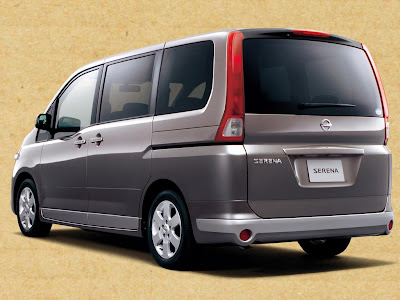
New Nissan Serena to be launched 2011


Nissan Motor Co. Ltd. had launched its new Nissan Serena minivan in the international market in June 1991. Now the car is expected to be launched in India by 2011.The model is likely to go on sale on 29th November at various Nissan dealerships all over the country.
Nissan Serena has been especially acclaimed by families because of its spacious and comfy cabin and versatile seat arrangement. The model got the No.1 position in minivan sales for 3 continuous years, from 2007-2009. The car will come with the fuel economy of 15.4km/L (10-15 mode). The new Idling Stop system of Nissan will also be provided  in this Serena minivan. An ECO motor will restart the engine of this car quickly and quietly. A newly developed direct-injection engine with Xtronic CVT will be provided in this new model.
The spacious interiors of the new Nissan Serena minivan will have a roomy cabin which will provide a comfortable space for all the members of the family. A large cargo area will let you have all the enjoyment with your family. The big windows, the new interior openness and certain  features like big luggage compartments, cockpit with great visibility etc will definitely impress anyone at the first look. An advanced meter in the new Serena will give eco drive information.
The exteriors of this car will flaunt a smooth and flowing design. The car will have a distinctive front along with large front grille and bumper. The advanced and efficient design of the engine along with the Idling Stop system will provide a superb performance to the car. The new Serena minivan will provide  improved aerodynamics performance, stable maneuverability and a comfortable driving. The safety and environmental features of the new Nissan Serena minivan will include an auto light system, multi-reflector halogen headlights, halogen fog lamp-equipped front bumper, xenon headlamps, electric retractable remote control body-colored door mirrors, VDC (Vehicle Dynamics Control), LED High-Mount Stop Lamp, hill start assist, ABS (Anti-lock Braking System), SRS air bag system, front seat active head restraints, low-friction Seatbelts etc. The new Nissan Serena minivan will have increased interior dimensions. A large-capacity underfloor compartment will also be present.

07 November 2011

Worker's death 'due to negligence'

2011/11/07
http://www.nst.com.my/nst/articles/8sxc/Article/
KOTA KINABALU: Police believe that the death of a restaurant worker, whose head was trapped inside a dumb waiter, was caused by her own negligence.


Investigations revealed that Lau See Yen, 20, was alone when she operated the dumb waiter, which is used to transport food and utensils between the floors of the two-storey restaurant in Luyang, on Sunday.

City police chief Assistant Commissioner Ahmad Sofi Zakaria said Lau appeared to have put her head inside the dumb waiter instead of her hands.

"Investigations are continuing into the case, which has been initially classified as sudden death," he said, adding that the probe had not uncovered any criminal element.

Police are trying to determine whether the chute had malfunctioned when Lau used it.

In the incident on the upper floor of the restaurant on Sunday about 1pm, Lau sustained injuries to her head and neck.

Police, however, were not able to confirm how her head got stuck inside the chute.

Her colleagues pulled her out of the chute and two doctors who happened to be in the premises administered cardiopulmonary resuscitation on her.

However, Lau died about 9.15pm at the intensive care unit of Queen Elizabeth Hospital.


Read more: Worker's death 'due to negligence' http://www.nst.com.my/nst/articles/8sxc/Article/#ixzz1d5PJ9320

PM selesai tunai haji

http://www.utusan.com.my/utusan/info.asp?y=2011&dt=1107&pub=Utusan_Malaysia&sec=Muka_Hadapan&pg=mh_04.htm


Najib Tun Razak dan Rosmah Mansor mengerjakan tawaf haji di Masjidilharam, Mekah, semalam. - BERNAMA
KUALA LUMPUR 6 Nov. - Datuk Seri Najib Tun Razak dan isteri, Datin Seri Rosmah Mansor selesai menunaikan ibadah haji bersama jutaan umat Islam lain. "Alhamdulillah urusan haji kami sudah selesai," kata Perdana Menteri menerusi laman Twitternya. Beliau turut mengambil kesempatan mengucapkan Selamat Hari Raya Aidiladha kepada umat Islam di Malaysia. Najib dan Rosmah ialah antara 28,000 rakyat Malaysia yang menyempurnakan ibadah haji tahun ini. Menunaikan rukun Islam kelima itu bersama Perdana Menteri ialah ibu beliau, Tun Rahah Mohamad Noah dan adik Najib, Datuk Mohamed Nazim serta Menteri Besar Perak, Datuk Seri Dr. Zambry Abdul Kadir. — BERNAMA

06 November 2011

Projek Perumahan Taman Cempaka

Nov 2011 Projek perumahan depan rumah mula dah...
 Jalan depan rumah jadi sempit lak.
 Zink penghadang baru dipasang untuk melindungi
tapak projek.

24 October 2011

NGV Tech mahu labur RM620j

Oleh Jalal Ali Abdul Rahim, Shamsul Kamal Amarudin, Mohd Feroz Abu Bakar
2010/06/21
 NAJIB  memusing kemudi kapal simbolik melancarkan projek pembinaan limbungan kapal NGV Tech   sambil diperhatikan  Dr Ahmad Zahid  (dua dari kiri) dan  Dr Zambry   (kanan)  di   Bagan Datoh, semalam.
NAJIB memusing kemudi kapal simbolik melancarkan projek pembinaan limbungan kapal NGV Tech sambil diperhatikan Dr Ahmad Zahid (dua dari kiri) dan Dr Zambry (kanan) di Bagan Datoh, semalam.
Bina limbungan di Bagan Datoh, wujudkan 5,000 peluang pekerjaan


NGV Tech Sdn Bhd (NGV Tech), syarikat milik penuh Bumiputera akan melabur RM620 juta untuk membina limbungan dan pusat penyelenggaraan kapal keluli di Bagan Datoh, Perak yang dijangka mampu mewujudkan sehingga 5,000 peluang pekerjaan.

Projek di muara Sungai Perak itu juga membabitkan pembinaan limbungan kering sebagai kawasan pemotongan kapal yang terbesar di dunia. Ia akan dilaksanakan dalam dua fasa pembinaan yang mana membabitkan perbelanjaan berjumlah RM220 juta dan RM400 juta dalam tempoh tiga tahun. Perdana Menteri, Datuk Seri Najib Razak, berkata apabila projek itu bermula, Bagan Datoh yang selama ini dikenali sebagai ‘pekan koboi’ akan mengalami banyak perubahan termasuk pembinaan lebih banyak rumah kedai dan kediaman baru bagi menampung aktiviti dan peluang baru yang wujud di kawasan berkenaan.

“Saya diberitahu NGV Tech sehingga kini sudah membina lebih 157 kapal termasuk kapal peronda pantai dengan sebahagian besarnya dieksport ke pasaran antarabangsa seperti Mesir, Yaman, Bahrain, Jepun, Kuwait dan Iran.

“Syarikat ini secara senyap-senyap, dengan kurang publisiti dan saya sendiri tidak mengetahui kewujudannya sehingga diberitahu, telah menunjukkan prospek dan masa depan yang sangat baik serta begitu membanggakan,” katanya ketika melancarkan projek pembinaan limbungan kapal itu di Bagan Datoh, Perak, semalam.

Hadir sama, Menteri Besar, Datuk Seri Dr Zambry Abdul Kadir; Menteri Pertahanan yang juga Ahli Parlimen Bagan Datoh, Datuk Seri Dr Ahmad Zahid Hamidi serta Pengerusi Eksekutif NGV Tech, Zulkifli Shariff.

Najib berkata, kejayaan NGV Tech sekali gus menafikan anggapan sesetengah pihak bahawa Bumiputera hanya akan berjaya jika diberi kuota tertentu dan menerima pertimbangan khas daripada kerajaan khususnya dalam projek perniagaan.

Katanya, NGV Tech membuktikan syarikat itu yang tidak pernah mendapat perhatian khas daripada kerajaan sebaliknya menerima kepercayaan daripada pelbagai pihak di luar negara membabitkan projek bernilai berbilion ringgit.

Justeru, katanya, jika kerajaan memberi peluang kepada NGV Tech, tiada sesiapa boleh mengatakan kerajaan memberi projek perniagaan kepada syarikat tempatan yang tidak berdaya maju.

“Kita tidak mahu beri (projek) kepada anak tempatan yang kemudian menjual kontrak itu kepada orang lain atau sub kepada orang lain kemudian lesap. Kita tidak akan iktiraf syarikat seperti ini,” katanya.

Najib berkata, kejayaan Model Ekonomi Baru (MEB) berpaksi kepada syarikat tempatan termasuk dimiliki Bumiputera yang ada potensi berjaya bukan saja di Malaysia tetapi rantau ini dan antarabangsa.

Sementara itu, Zulkifli berkata, pihaknya memilih Bagan Datoh sebagai tapak limbungan berkeupayaan membina kapal sehingga 250 meter panjang, kerana kedudukan strategik di tengah laluan kapal Selat Melaka selain lautnya dalam.

Katanya, walaupun limbungan baru di Bagan Datoh siap nanti, namun limbungan sedia ada di Sijangkang, Selangor, bernilai RM300 juta kekal sebagai tempat membina kapal aluminium. Ia juga katanya, akan diperbesarkan menjadi limbungan kapal aluminium terbesar di dunia.

“Menerusi rangkaian perniagaan dengan pelbagai negara yang dijalin sejak 2000, NGV Tech akan memastikan limbungan kapal di Bagan Datoh sentiasa sibuk dengan kerja pembinaan dan penyelenggaraan kapal selain menawarkan khidmat baik pulih terhadap kapal antarabangsa yang melalui Selat Melaka,” katanya.
http://www.bharian.com.my/articles/NGVTechmahulaburRM620j/Article/